Concrete Slab & Foundation Work
Solid foundations built right the first time for homes, garages, and outbuildings.
Why Your Foundation Matters
Everything in your building sits on the foundation. If the foundation moves, settles unevenly, or develops cracks, you end up with doors that stick, floors that slope, and walls that crack. Getting it right from the start saves you from expensive repairs later.
Concrete slab foundations work well in Lancaster because our soil is relatively stable and we do not have the extreme freeze depths you find further north. The slab sits on compacted fill and provides a solid, level base for your structure. It costs less than a full basement and goes in faster than a crawl space foundation.
When we pour a foundation slab, we follow strict engineering standards. The concrete needs the right strength rating. The base must drain properly. Reinforcement has to be positioned correctly. These details determine whether your foundation in Lancaster lasts 50 years or starts causing problems in five.
Types of Concrete Slabs We Install
Not all slabs serve the same purpose. We match the design and specifications to what you are building and how you plan to use it.
Slab-on-Grade Foundations
This is the most common foundation for single-story homes, garages, and additions. The concrete sits directly on compacted soil with a gravel base underneath. We thicken the edges to provide extra support where walls rest. This type works well when you do not need basement space and want to minimize excavation costs.
Garage and Workshop Slabs
Garage slabs need to handle vehicle weight and resist automotive fluids. We typically pour these 5 to 6 inches thick with wire mesh or fiber reinforcement. Proper slope ensures water flows toward the door opening instead of pooling inside. Many homeowners also add our epoxy coating services for extra durability and easier cleaning.
Shed and Outbuilding Slabs
Smaller structures like sheds, pool houses, or workshops need simpler foundations. A 4-inch slab with proper base prep handles most applications. The key is getting the perimeter level and square so your building sits correctly. Even small slabs need control joints and adequate curing to prevent cracking.
Commercial Foundation Work
Commercial buildings often require thicker slabs, heavier reinforcement, and specific engineering details. We work from engineered plans and coordinate with building inspectors. Whether you need a retail space, warehouse, or office building, we have experience with larger commercial foundation projects. See our commercial concrete services for more details.
How We Build Foundation Slabs
Foundation work follows a careful sequence. Rushing or skipping steps leads to problems you cannot easily fix later.
- •Site preparation: We excavate to the proper depth, remove organic material, and establish correct grades for drainage.
- •Base installation: A layer of compacted gravel provides drainage and prevents settling. We compact it in lifts to achieve proper density.
- •Vapor barrier: Plastic sheeting under the slab stops moisture from wicking up through the concrete. This matters more if you plan finished interior space.
- •Reinforcement: Rebar or wire mesh adds tensile strength. We position it at the correct height in the slab thickness.
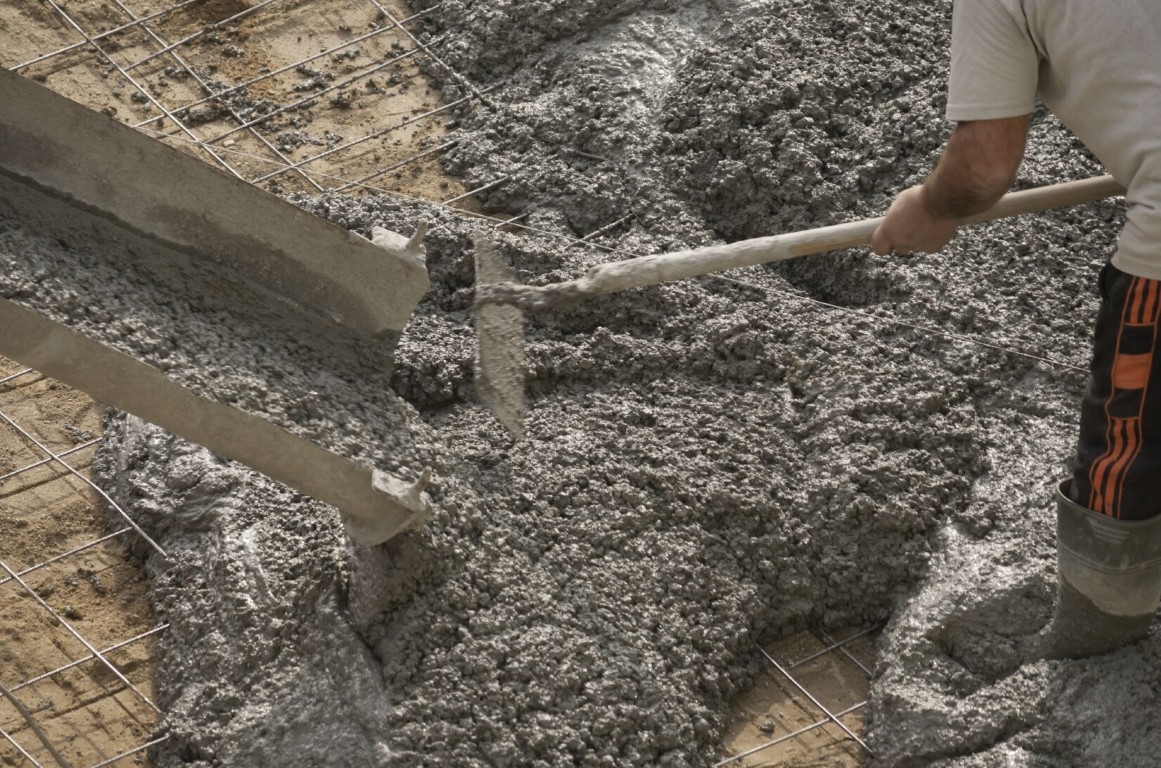
- •Concrete placement: We pour, screed, and finish the concrete to the specified thickness and surface texture.
- •Curing: Proper moisture and temperature control during curing ensures the concrete reaches full strength.
Most foundation slabs take 5 to 7 days from excavation to final cure. Larger projects or complex sites may take longer. Weather affects the schedule since we cannot pour during freezing temperatures or heavy rain.
Building codes require inspections at various stages. We coordinate with local inspectors and ensure all work meets or exceeds code requirements. You get documentation showing the foundation was built correctly.
Foundation Questions We Hear Most Often
Here are straightforward answers to common concerns about concrete slab foundations.